

Everyday Expressions
‘Take a Chance’ and ‘Give Someone a Chance’ in Portuguese
Portuguese uses different phrases for taking a risk and giving another person an opportunity.
Read articlePractical guides, real-life examples, and cultural insights to help you understand everyday Brazilian Portuguese and speak with confidence.
Portuguese uses different phrases for taking a risk and giving another person an opportunity.
Read articleLearn natural Brazilian Portuguese alternatives to the literal English phrase ‘look forward to.’
Read articleLearn friendly phrases for keeping in touch after a trip, event, course, or work project.
Read articleSe dar bem describes getting along with a person or group in everyday Brazilian Portuguese.
Read article
Portuguese uses different verbs for understanding an explanation, discovering a fact, and solving a problem.
Read articleLearn natural Brazilian Portuguese for generating an idea, proposing a plan, or finding a solution.
Read articleUse concordo to agree, concordo com to name the person or idea, and estou de acordo for a slightly more formal tone.
Read articleDepende works as a complete answer; add de before the factor that changes the answer.
Read articleTanto faz can mean either option is fine, while não me importo can sound more indifferent or dismissive.
Read articleEstar acostumado describes a familiar situation; acostumar-se describes the process of getting used to it.
Read articleFicar sem describes having none left; acabar can describe a supply or resource running out.
Read articleEmprestar can mean lend or loan; add pegar emprestado to make clear that you are the borrower.
Read articleTrazer usually moves something toward the speaker or destination; levar moves it away to another place.
Read articleUse dizer for saying words, contar for telling a story, and falar for speaking a language or having a conversation.
Read articleVer is broad seeing, olhar focuses attention, and assistir is commonly used for watching a film or show.
Read articleSaber is knowing a fact or how to do something; conhecer is being familiar with a person or place; encontrar is meeting or finding.
Read articleEsperar covers waiting and expecting; use torcer para when you mean to hope for a favorable outcome.
Read articleThese related Portuguese words overlap, but emprego usually means a position and trabalho can name work, a task, or a workplace.
Read article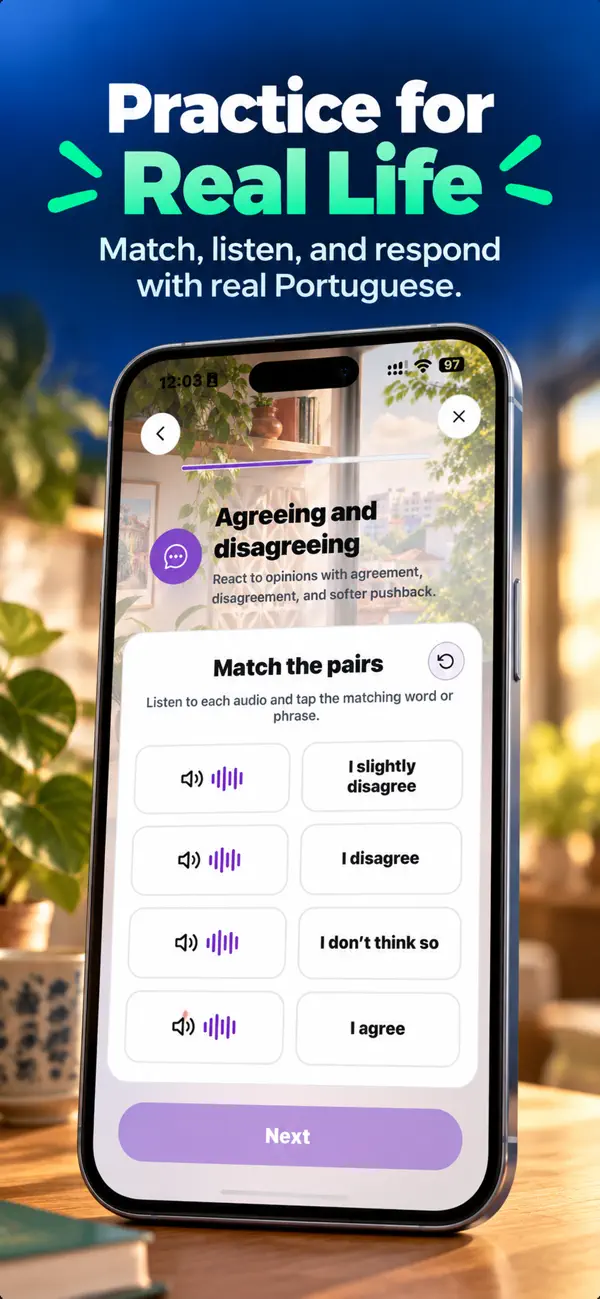
Short lessons and real conversations help you take what you learn into everyday Portuguese.